
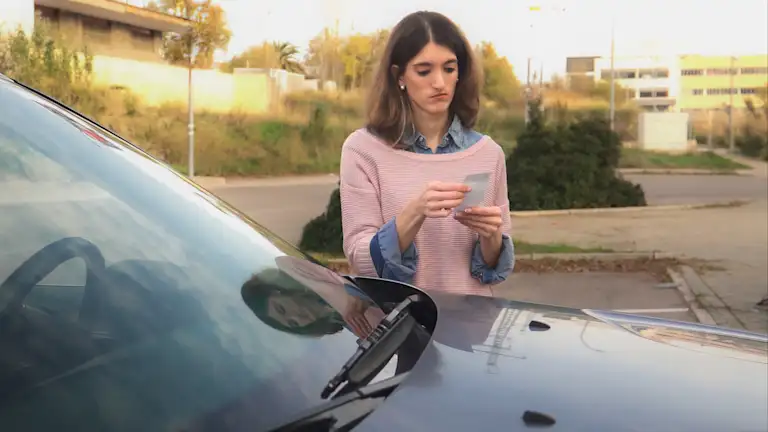
If you get a parking ticket, not paying it might make it hard to renew your licence.
In BC, parking tickets fall into two categories: municipal tickets (issued by bylaw officers on public property) and private parking notices (issued by companies on private lots). Each carries different legal weight and consequences. But figuring out what to do after you see that dreadful flapping piece of paper on your windshield isn’t always easy. Here we explain the types of parking tickets and walk you through what you can do about them.
What you should know
Parking tickets typically fall into two categories — municipal or private.
A municipal ticket is issued when you park on public property — like a street or city-owned lot. A bylaw officer can ticket you for breaking local rules, like not paying for parking, parking too close to the curb, or parking for too long in a certain spot.
A private ticket is issued when you park on private property, such as a mall or commercial lot. If you don’t pay, stay too long, or otherwise break the posted rules, the property owner or their contractor may issue a ticket.
Not all parking tickets carry the same legal weight — and some might not be enforceable at all.
When a private lot leaves notice on your windshield, they're saying you broke the terms of your contract to park there. But for a contract to be valid, both sides must agree to clear terms. If the signage in that lot didn't plainly spell out what you'd owe for overstaying or parking without paying — including the specific amount of any penalty — it can be hard for the company to argue you ever agreed to it. A vague sign saying "unauthorized vehicles will be ticketed" almost certainly doesn't cut it.
Municipal tickets are a different story: they're backed by bylaws, which means the city or town doesn't need your agreement — the rules apply to everyone who parks on a public street, whether they like it or not. So while a $50 municipal parking ticket might feel outrageous, it's legally solid. A private lot notice for the same amount, issued without clear posted terms, is legally more flimsy.
"I got a $65 parking ticket ($65!) outside my old apartment and just... forgot about it. Life was busy. About a year later I got a letter from a collection agency saying I now owed $205 — the original fine plus late fees and a collections fee on top of that. I ignored that too. A few months later I went to finance a used car and my application got flagged because of a collections item on my credit report. I had to pay the whole thing off, plus wait several months for my credit file to recover enough to get a decent interest rate on the loan. That $65 ticket ended up costing me a lot of time and stress."
– Jordan, Kamloops, BC

When it comes to municipal parking tickets, the consequences for ignoring them are real. Most BC cities and towns offer a discount if you pay quickly — Vancouver, for example, takes 30% off if you pay within 14 days. Miss that window and the full amount kicks in. Leave it longer and the municipality can send your debt to a collection agency, which can affect your credit score. In some communities, vehicles with a string of unpaid tickets can be flagged and towed the next time they're found parked in violation.
ICBC won’t block licence renewals over unpaid municipal parking tickets. (Whereas unpaid traffic violation tickets issued by police — like speeding — do need to be cleared before you can renew your driver's licence.) Still, ignoring a municipal ticket is a bit like ignoring a small leak. It probably won't sink you right away, but it tends to get worse the longer you leave it.
"I parked in a private lot near a coffee shop and didn’t pay. I figured I’d be in and out, but saw the ticket on my windshield when I returned. A $95 ticket, with a requirement to pay it off in 7 days. I was too stressed to deal with it. A few months later I started getting letters from a collections agency demanding $235. It was jarring. I spent two months stressed when the mail arrived or my phone rang. Eventually I looked into it and realized it almost certainly wouldn't affect my credit score. I sent a written request to the collection agency to stop contacting me, and the calls and letters stopped. Do I feel a nagging worry that somewhere out there this unpaid notice has my name on it? Sure, a little. And I know I'll never park in that lot again.”
– Renata, Victoria, BC

With private parking tickets, the consequences are less drastic. The company that owns the lot will send you reminder notices, and if you continue to ignore them, they might refer the debt to a collection agency — which will then call and write to you, sometimes quite persistently. That can feel stressful, but it's worth knowing that under BC's consumer protection laws, collection agencies have to follow rules: they can only call between certain hours, they can't threaten or intimidate you, and you can request in writing that they stop contacting you (though that doesn't erase the debt itself).
Otherwise, Canada's two major credit bureaus, Equifax and TransUnion, don’t typically include private parking fines in credit scores. So while the letters and calls are annoying, the actual financial damage is likely minimal.
The one consequence private parking companies can enforce pretty reliably is this: if you ever park on their lot again, they can have your car towed. Their system may flag your licence plate, and your vehicle can be removed at your expense. Beyond that, they could theoretically take you to small claims court. But for a $75 or $100 notice, very few companies will spend the time and money to do it. So, the realistic picture for an unpaid private parking notice is: some collection calls, a low risk of credit impact, and a very good reason never to park there (or at other lots managed by the same company) again.
BC municipalities have a formal dispute process for parking tickets. There may also be informal steps you can take first. In Vancouver, you can start by calling the Ticket Inquiry line or viewing photos online taken by the bylaw officer. At this stage, you can ask the municipality to void the ticket if there’s a clear error. That would be things like:
You paid for parking, and have proof. Sometimes people will have paid for the spot, but put the wrong licence plate number into a parking payment app; the municipality might be forgiving, especially if it’s the first time.
The bylaw officer wrote the wrong licence plate number or location on the ticket.
You do in fact have a permit to park where you did. Sometimes mistakes are made with parking zones.
If that step doesn't work, you can dispute the ticket more formally; see below under step 4 for details. It’s generally difficult to win at this phase unless you have a very good argument, like poor or improper signage, a broken meter, or a medical emergency (with documented proof). Act quickly, because the clock on late fees doesn't pause while you figure out your next move.
With private parking notices, the dispute process is less formal but might be more forgiving. Your first step is simply to contact the company directly — by phone or, better yet, by email so you have a record. Check the back of the ticket for contact info. Explain what happened. Many companies will waive or reduce a notice for a first-time situation or if the circumstances were genuinely unusual, especially if you're polite and persistent. They'd often rather resolve it quickly than spend time chasing a small debt. It's worth trying even if you're not sure you have a strong case.
See below for additional steps you might take to dispute a ticket.
A collections item on your credit report can meaningfully damage your credit score — potentially by dozens of points or more, depending on your overall credit profile. The impact might be worse if your credit history is otherwise clean, since a single negative item stands out more. A lower credit score can make it harder to get a loan, rent an apartment, or qualify for a good interest rate. The good news is that damage from a collections item fades over time, and paying or resolving the debt helps. For municipal parking tickets sent to collections, this risk is real. For private parking notices, as discussed above, the major credit bureaus have indicated they typically don't incorporate these — but it's not an absolute guarantee.
Work out the problem
Before you get upset, before you pay, and before you throw it in your glove box and forget about it — read the ticket carefully. Is it from a municipal bylaw officer or a private parking company? The difference matters (see above).
Look at the date, the time, the location, and the stated reason for the ticket — errors in any of these details can be grounds for a dispute. If it's a private notice, look for a breakdown of the amount being claimed and think about any signage you remember seeing in the lot. Take a photo of the ticket right away, and if you can, go back and photograph the parking signs at the location while you still can. A little attention at this stage can save you a lot of trouble later.
If the ticketing is in progress
If you notice a city bylaw officer writing you a ticket, try talking to them calmly. If they haven’t issued it yet, they might not give you one if you pay for parking, or move your vehicle, immediately. Otherwise, if they’ve just issued the ticket, it’s unlikely they’ll be able to cancel it — but consider paying for parking anyway. You might be able to call your municipality to say that you had just paid already, and they could cancel the ticket.
If it's a municipal ticket, the relevant rules come from your city or town's parking bylaws — these are publicly available on the municipality's website, and they set out everything from how long you can park in a given zone to what the fines are to how the appeal process works.
Find your local parking bylaws
To find your community's parking bylaws, search here by typing in your community name and parking bylaws — for example, kelowna parking bylaws.
If it's a private parking ticket, the relevant "rules" are less clear cut. They're based on contract law, and the key question is whether the signage in that lot gave you fair and specific notice of the terms you were supposedly agreeing to.
Now you can make a deliberate choice about what to do next — and there's no single right answer.
If it's a municipal ticket and you believe it was issued in error, the first layer of challenging it is almost always worth attempting, since these tickets can be voided quickly by front line city staff (see above under informal ways to challenge a ticket). If your argument is open to interpretation, it’s more difficult to win a formal appeal, and at that point, the amount owing might be much higher with extra penalties for bringing a formal dispute and losing. See the next step for more on disputing the ticket.
If the ticket is valid, paying promptly can be the smartest move — the discounts for early payment are real, and the consequences for letting it drag grow steadily worse.
With a private parking ticket, you might have good reason to decide not to pay, especially if the signage was unclear or the amount of the ticket is unreasonably high. But go in with your eyes open. Choosing not to pay means accepting that collection calls and letters may follow, and that you may never be able to park at that company's lots again without risking getting towed. If you’ll have ongoing anxiety about being “in debt” to a parking company, paying might be best.
You can take informal steps to challenge both municipal and private tickets; see above under what you should know.
Disputing a municipal ticket
For municipal tickets, there’s also a formal dispute process. In Vancouver, for example, here is how the dispute process works. Check your ticket for instructions specific to your municipality. Or contact the municipality directly for info about its process.
Generally, here is what’s involved in disputing a municipal ticket.
To start the process, you must apply to dispute the ticket — usually within 14 days of when it was issued.
In many municipalities, your dispute is first reviewed by a screening officer. They may contact you to discuss the ticket, and in some cases can cancel it without a hearing.
If the ticket isn’t resolved at that stage, it will go to an adjudication hearing. At the hearing, the municipality presents its evidence — often including notes and photos from the bylaw officer. You can respond and provide your own evidence, such as photos, receipts, or permits.
The adjudicator’s role is to decide whether the bylaw was broken. They generally won’t consider personal circumstances or whether the ticket feels unfair.
Hearings are relatively informal. Depending on the municipality, they may take place in writing, by phone, or in person.
If your dispute is unsuccessful, you’ll usually have to pay the full ticket amount (not the discounted rate), and you may also be charged an adjudication fee.
Disputing a private ticket
With a private ticket, start by contacting the company and trying to resolve the issue informally. Many of these companies have an online appeal process; do a web search to find it. Many companies will waive or reduce a ticket — especially for a first-time incident or unusual circumstances — if you’re polite and persistent.
If they refuse to budge and refer your notice to a collection agency, you're not out of options. Under BC law, you can submit a formal dispute of alleged debt form to both the collection agency and the original creditor. Once you do that, the agency must stop contacting you while the dispute is being resolved. Consumer Protection BC has the form on their website, and walks you through the process. It won't necessarily make the debt disappear, but it puts the ball back in the company's court — and forces them to actually pursue it through the courts if they want to collect.
If a collection letter arrives in the mail, read it carefully — but don't let the tone rattle you. Look at the original ticket and know who the debt relates to (municipal or private lot), and whether the amount matches what you were originally told you owed — errors and inflated figures are not unheard of.
If it’s a municipal ticket, realize that continuing to ignore it might lead to consequences to your credit score.
Collection agencies are trained to write letters that feel urgent and official. Some private parking companies make this worse by operating under names deliberately designed to sound governmental, like "City Parking Services" or "Metro Parking Authority." They might not be the city. They are often private companies, and the letter landing in your mailbox is just an opening move to try to get you to pay.
If the debt is from a private lot and you want the calls and letters to stop, you have the right under BC law to request in writing that the agency communicate with you only in writing. You also have the right to submit a formal dispute of alleged debt form, available through Consumer Protection BC. Knowledge is your best tool here: a letter that feels like a threat is often a lot less powerful than it looks.
If the letter is actually a formal notice of claim, where the debt collector or parking company intends to sue you in a BC court, pay close attention. You’ll have to respond within certain timelines (14 days if the case is being heard at the CIvil Resolution Tribunal or small claims court) and prepare to defend yourself in court. Ignoring this type of notice, or losing in court but still refusing to pay, can lead to more serious consequences.
Common questions
It really depends on the signage at the lot and whether you find calls and letters from debt collectors stressful.
If the parking terms and consequences of not paying were made very clear at the lot, it’s likely the ticket is a valid contract. If you don’t pay, the parking lot could try to enforce that contract by sending the amount owing to collections or (unlikely) suing you in small claims court. If you do pay, you’ll have peace of mind, and you won’t get calls from debt collectors or threatening letters in the mail.
Either way, not paying is unlikely to hurt your credit score or your ability to renew your driver's licence in BC.
For municipal tickets sent to collections, yes — a collections item can meaningfully impact your credit score. For private parking notices, Canada's major credit bureaus generally don't include these in credit scores, though this isn't an absolute guarantee. See above for more on the difference between municipal and private parking tickets.
If someone else was driving your car when a parking ticket was issued, the ticket is still your problem — at least as far as the municipality or the private lot is concerned. Municipal tickets are issued to the vehicle, not the driver, which means the registered owner is liable for payment regardless of who was behind the wheel. The same is true if your car gets towed: you'll have to pay the impound fees first and sort out who owes what later. If someone else was responsible, the most straightforward approach is to have an honest conversation and ask them to reimburse you.
Parking lot operators often send unpaid tickets to collections. But ICBC doesn’t freely hand out your contact information to private collection agencies.
If you’ve parked in that lot before, or at another location, you might have paid using an app, which would provide a debt collector with some data to find your address. Debt collectors also use a licence plate to look up credit bureau or vehicle insurance data, or other publicly available information, to find a name and address. It’s imperfect — they cast a wide net and figure they can send out collection letters to whoever turns up in their search in an effort to get paid.
Who can help
Consumer Protection BC
Find help if you're having trouble with a debt collector, payday loan, credit report, or repayment options.
